
Radical Ecosystem Pods
Having a well-connected and skilled network of neighbors minimizes the need to reach beyond our own community for crisis support. Many of us already have the skills to assist our neighbors in navigating the minor incidents that arise in our lives – what’s lacking is often connection, coordination, and support.
That’s where REP’s Radical Ecosystem Pods and studios come in.
REP’s Pods fortify existing networks and support the creation of new networks by improving relationships between neighbors, identifying webs of support that already exist within reach, and reimagining what loving community looks like.
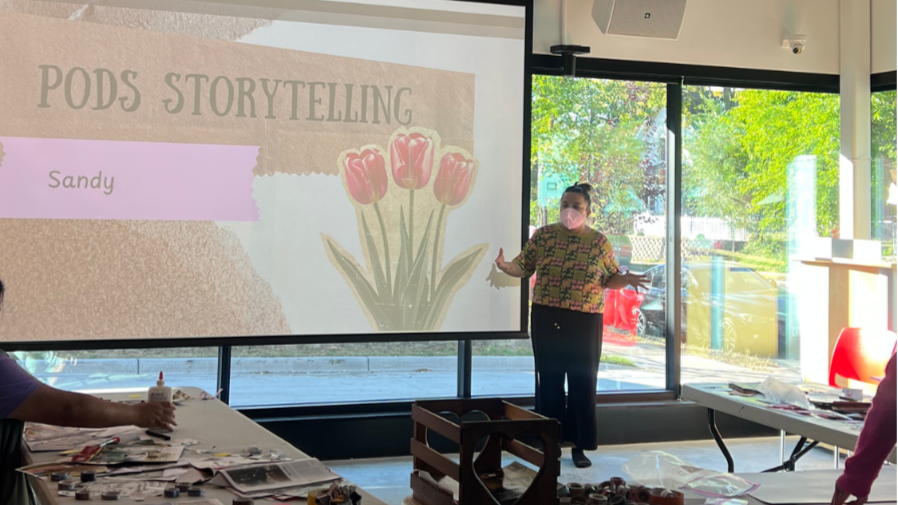
REP supports the formation of pods through ongoing trainings called “studios”. support neighbors in building skills in de-escalation, mental health support, and situational awareness.
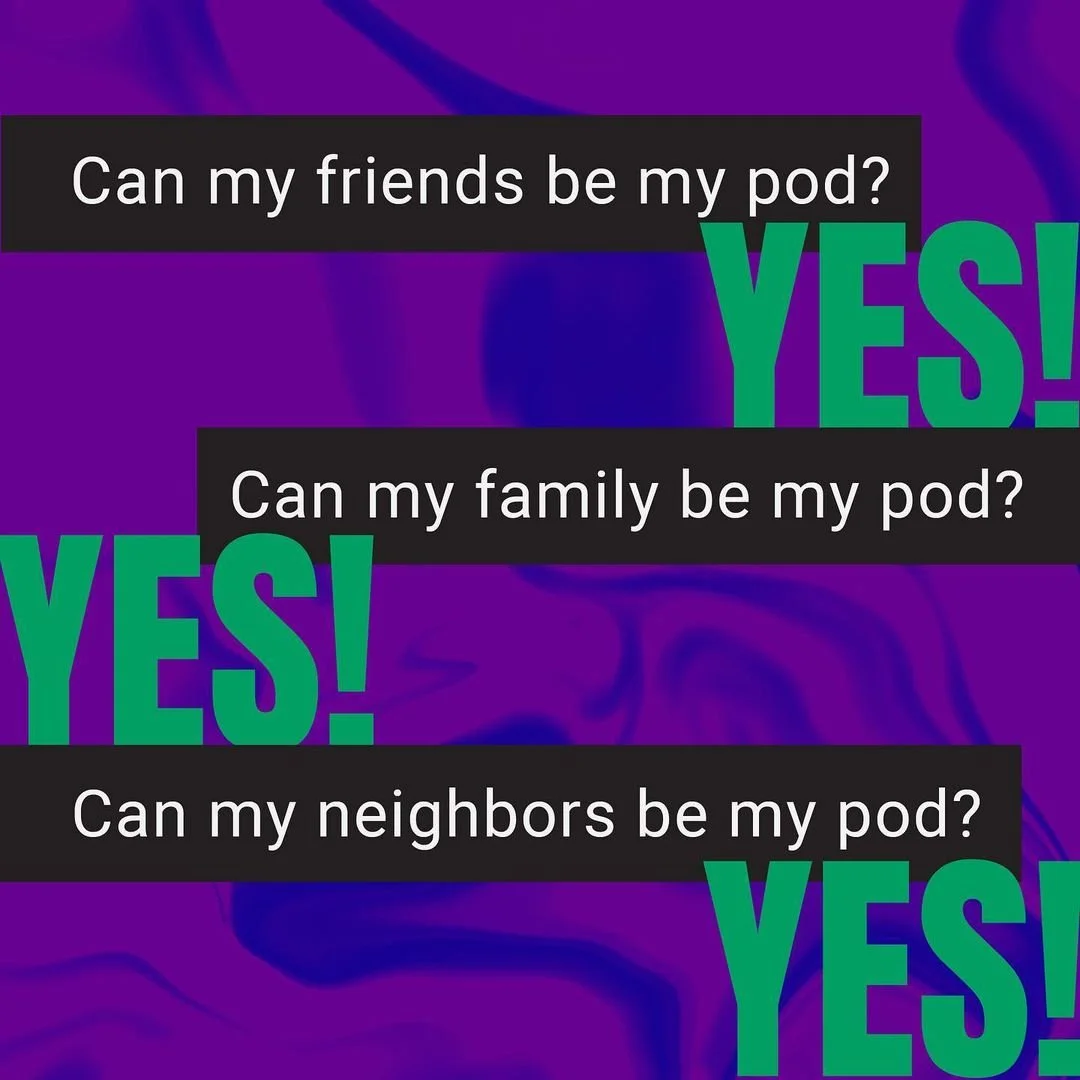
What is a Pod?
At its most basic, a pod is a group of people organized around shared agreements and common goals.
When REP talks about pods, we use the following definition:
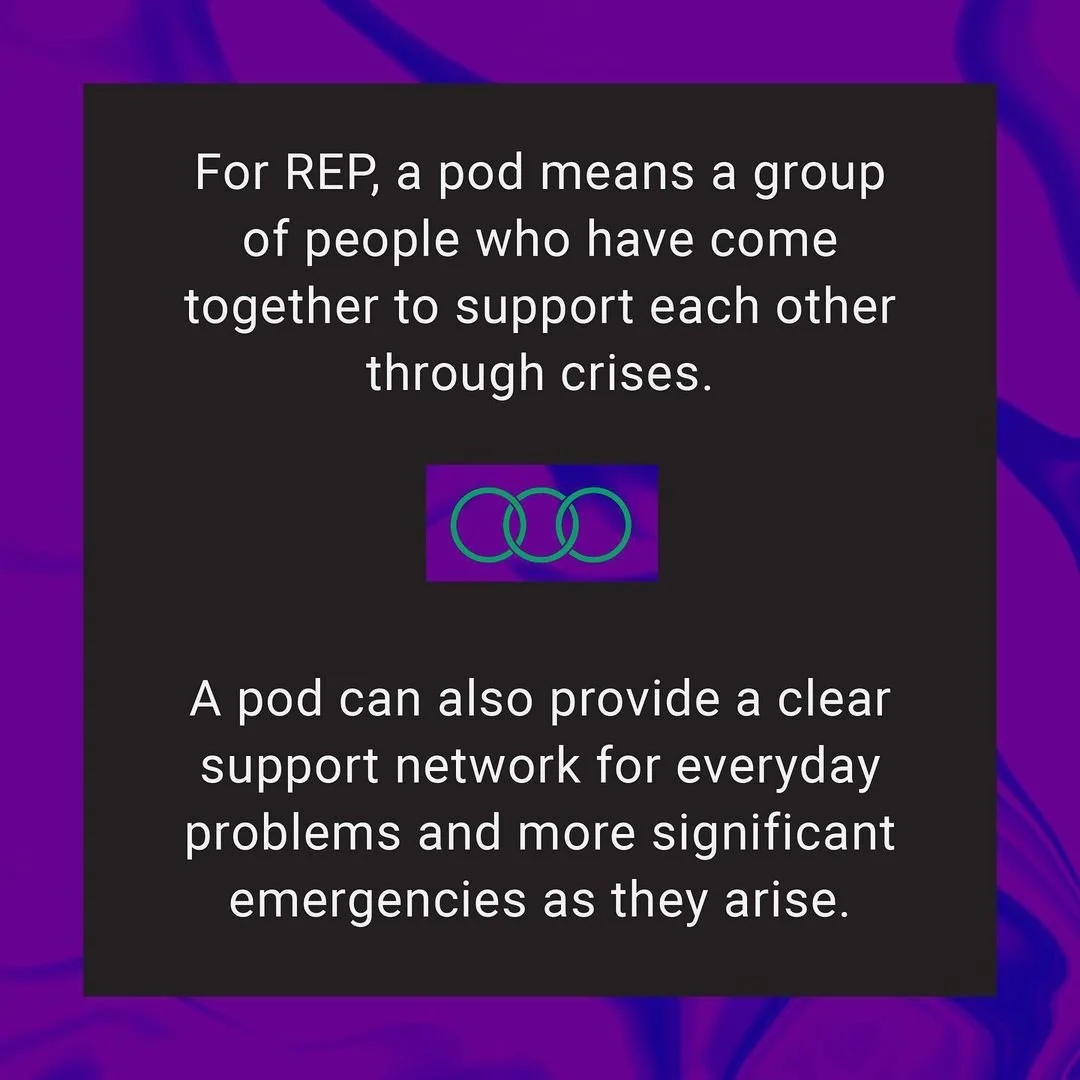
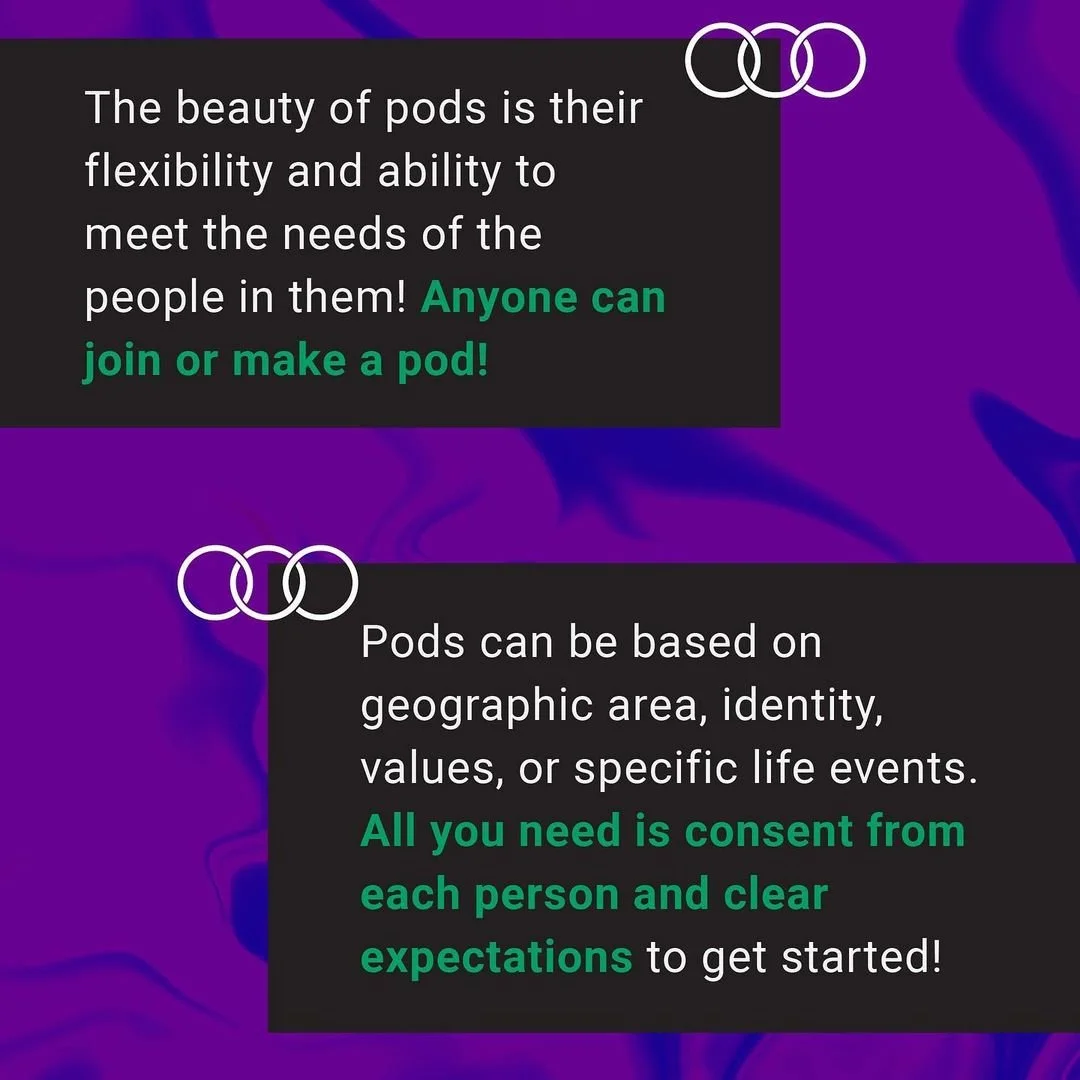
A POD is a group of people who have come together to support each other through crisis or change. The people of a pod can connect based on geography, identity, values, a time-specific need, and/or other factors. Pods have shared agreements for consent, communication, accountability and care.
The term “pods” was coined to describe, define, and replicate the ways communities of care self-organize as a response to state harm.
People have been intentionally coming together since time immemorial, long before the language of “pods”.
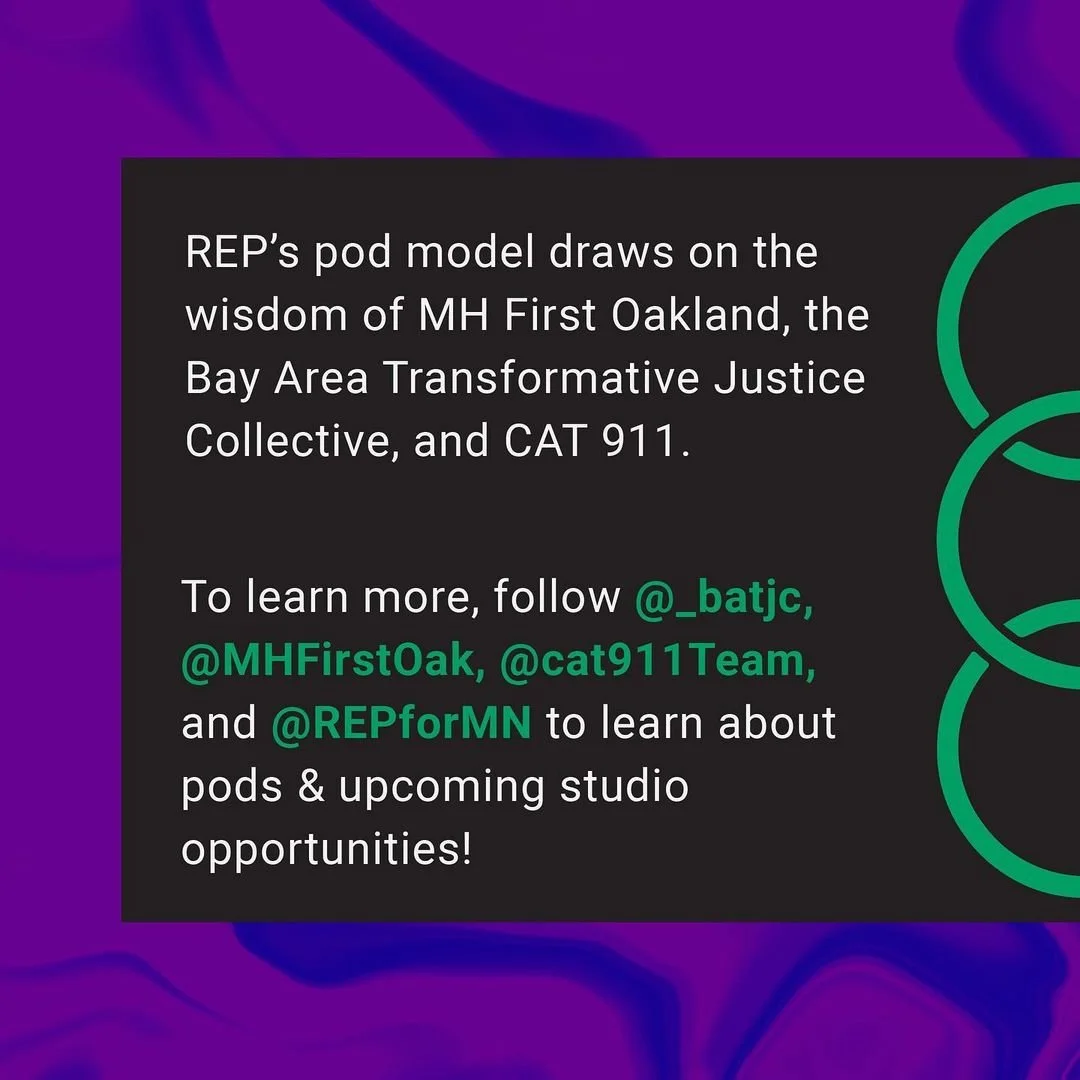
REP’s pods framework is synthesized from Bay Area Transformative Justice Project Pod and Pod Mapping Worksheet, BATJC “Lessons Learned”, and SOIL: A Transformative Justice Project.
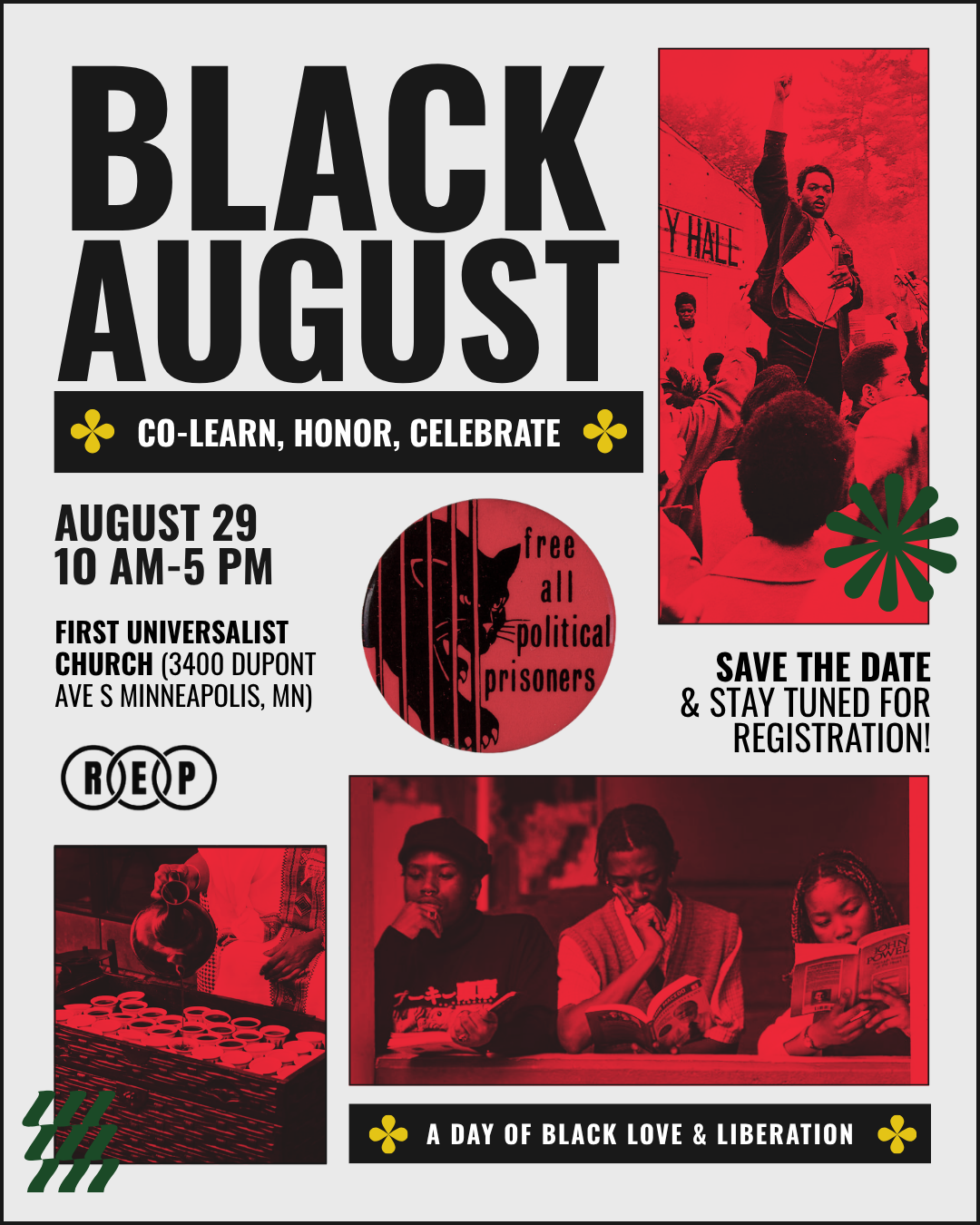
Black August - August 29th
10am-5pm
Why Pods?
“A pod is a tool to address and prevent harm, violence, emergency or crisis. Pods can also be used to address specific needs and aid in general support. Pods are made up of the people in our lives we can turn to first and rely on. These are the people in our lives who have consented to being there for us either for general or specific purposes.” -- SOIL: A Transformative Justice Project.
“Prior to this, we had been using the term ‘community’ when we talked about transformative justice, but we found that, not surprisingly, many people do not feel connected to a ‘community’ and, even more so, most people did not know what ‘community’ meant or had wildly different definitions and understandings of ‘community’” - Mia Mingus
Upcoming Offerings
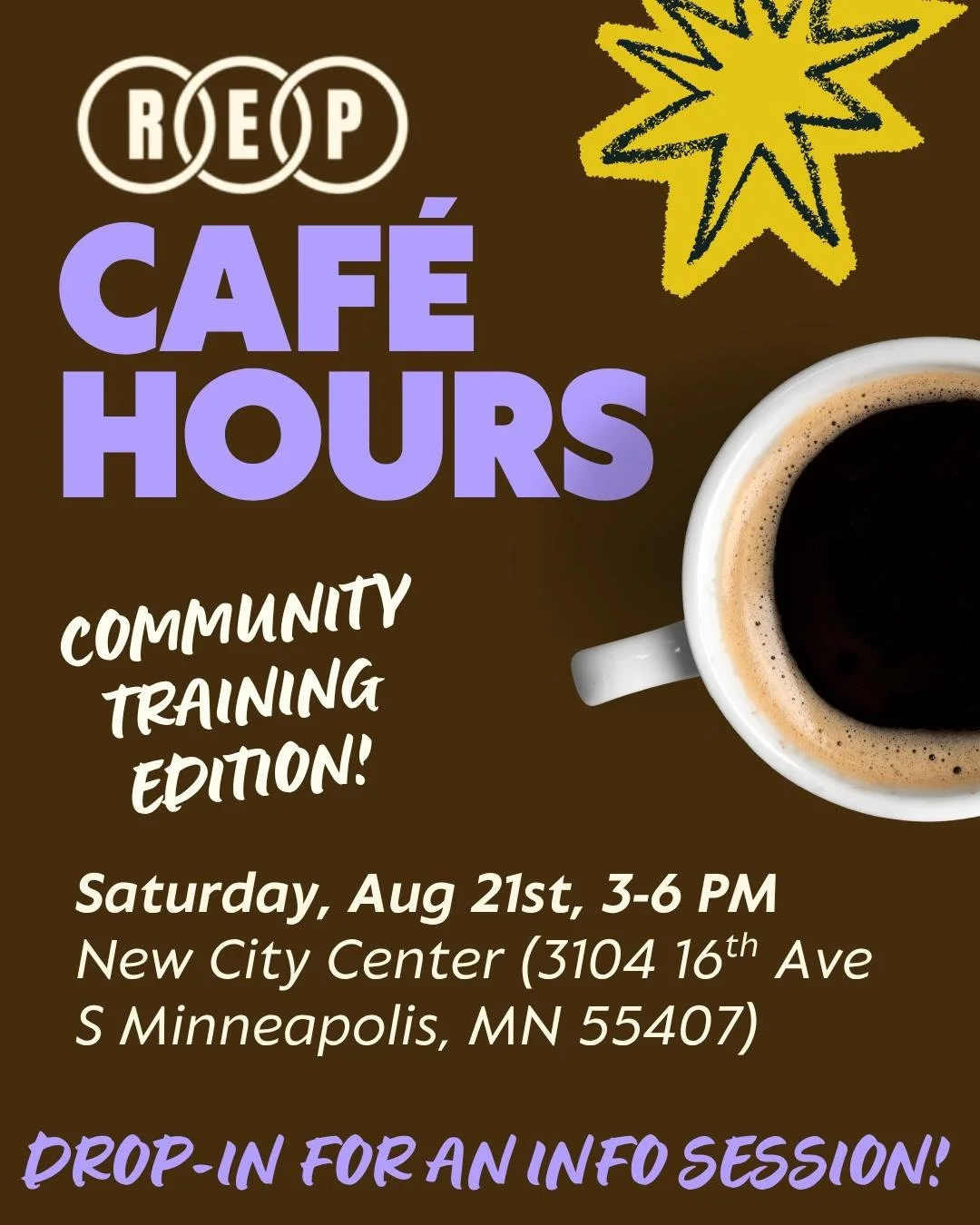
Café Hours - Info Session Edition
August 21st
3-6pm
Every first and third Friday of the month
New City Center (3104 16th Ave S, Minneapolis, MN 55407).
Save the Date!